Showing posts with label book tour. Show all posts

Monday, October 20, 2014

Book Tour: How to Build a Girl

| 1 comment:
In case my limited posting over the past couple of months isn't indicative enough, I'm here to tell you that actually being a librarian has, ironically, seriously hindered my reading habits. Without these book tour commitments, I wouldn't be posting at all, because I have barely been reading at all. The most I've read is a couple middle school books here and there, which are enjoyable and very relevant to my life right now, but I also really miss the frequent Kobo use I practiced earlier this year. Browsing the public library's eBook offerings, exploring an array of genres, crossing things off my 'to-read' list...ahhh, the life. That's one that has disappeared until May 27th.

Anyway, my most recent non-middle-grade book was Caitlin Moran's How to Build a Girl. And it was just the breath of funny, slightly crude, witty air to snap me out of middle school and back into the slightly vulgar adult world. [This is the hardest part of being an educator—censoring my language, stories, and references for a preteen audience. I'm not a very explicit person to begin with, but this is much harder than you'd think!]

This is the story of Johanna Morrigan in 1990, living in Wolverhampton, England (a boring industrial town, the opposite of cosmopolitan), and constantly embarrassing herself. Johanna has a sharp, mature sense of humor, but no one seems to appreciate it. She just doesn't seem to fit in in her world, so she decides to reinvent herself as Dolly Wilde—embodiment of the hip counterculture movement, appreciated by peers, expert on underground music, and sex connoisseur. What follows are the ups and downs as Johanna navigates her youth with a vision of who she wants to be and a reality that doesn't always live up to it. It's the story of the constant reassessing and reinvention that you hope will eventually get you there.

My advanced reader's copy opened with a letter from Moran:

"As with all books ever, I've written it not so much hoping you like it...No—I hope you remember it, all over again. Being a teenager—those years where you veer wildly between believing you are a terrible nuclear accident, and thinking you might actually be here to save the world. How you don't know how to kiss, how you try to walk in a cool way. How you talk to yourself in the mirror—hoping your reflection is somehow wiser than you are. And it never is. How you build yourself—for the first time, but not the last."

One thing I am constantly reminded of/put in my place about in working with adolescents is that even if you're an adult that still feels like a kid, you are not still a kid. Just by virtue of having "been through it" already, our emotions and rationale and decision-making skills are so far ahead of actual adolescents. Every day I see the way middle schoolers process information and handle situations and how they deal with conflict and solve problems. And it is so much harder for them, because they don't have the experience doing it—-that's experience we've built by trial and error over a decade or more, and though you may not always learn from your mistakes, you're always learning from the situations. If you're almost 30 and you don't feel like an adult yet, hang out with some 14-year-olds, and you'll feel like one real quick.

And that's what this book does. As a teenager, I was pretty much completely opposite the main character of this book, but the little ways in which Johanna tried to find her way were so relatable. She does things out of character just to do them—it's a self diagnostic to see what, if anything, is revealed. I found this a really enjoyable character to follow and a very funny, entertaining read.


This post is a stop on How to Build a Girl's TLC Book Tour! [And regretfully, perhaps my last post until a major school holiday!] Visit the tour page to read more about the book and its author. This book's tour is almost over, so be sure to also catch up on what other bloggers are saying about it!

Monday, October 6, 2014

Book Tour: Ballroom

| 3 comments:
Here's what's unique about Alice Simpson's debut novel Ballroom: it almost feels like we're reading a collection of short stories. We're introduced to a group of characters, loosely connected by one commonality—Sunday nights at the Ballroom. We experience their lives in small doses, in particular moments that reveal their past and present and identify just who they are.

But instead of sharing only brief but detailed snippets of our characters' lives, Simpson continues beyond the limits usually imposed by the short story. In a novel-length narrative, with short chapters switching focus from one character to the next, we are given a complete look at several lives and the one thing they all share—a love of dance.

The time period is supposedly the late 1990s (according to the book jacket!), though with all the jumping back and forth between past and present, it's difficult to stay put in this particular moment. It's easy to see, though, that this is a moment in the past when times weren't so different from the present, but modern customs of communication haven't yet entered the picture—cell phones, emails, and texts aren't a social norm. The story revolves around six very different individuals who each find comfort in the weekly dances at the Ballroom. For each of these characters, dance represents everything they're looking for in life—love and excitement, a future of happiness.

Their lives all seem rather drab. Harry Korn is a crotchety old man, living with a fantasy of his young neighbor, Maria. Maria longs to be accepted as a professional dancer, hungry for the excitement it will add to her life. Angel, Maria's dance partner, has big dreams for his life, and the Ballroom provides the control and certainty that he's often lacking. Joseph longs for a wife but some serious mommy commitment issues always stand in the way. Sarah is desperate for the glamorous life found in old Hollywood films, and especially desperate for the passionate love story part of it. Gabe is the suave, sexy one that always seems to be in the distance—the one whose attention you desire because it means you are worth looking at. But beneath his aloof persona, he's got a troubled marriage and declining parents.

I say this book is like an extended short story because, ultimately, there is no real plot. The Ballroom is what brings all of these people together, but it's more of a backdrop to their lives than a backdrop to the story's action. There is no real action. I enjoyed the style of this book, because I do like the detailed character portraits that short stories often do so well. Despite my lack of sympathy for any of these characters (they had few redeeming qualities), I was drawn into their lives and curious as to how they ended up. Ballroom reminds us that an unremarkable plot doesn't mean that nothing is happening; it may be quiet on the surface, but individual lives are rarely so uncomplicated.


This post is a stop on the TLC Book Tour of Ballroom! You can visit the tour page to learn more about the book, its author, and find a list of the other tour stops. This tour is almost over, so if you're intrigued, be sure to read through the many great responses so far!

Monday, September 22, 2014

Book Tour: Liar, Temptress, Solider, Spy

| 2 comments:
When TLC Book Tours approached me late this summer with some fall book suggestions, I was immediately drawn to Karen Abbott's new hefty piece of nonfiction called Liar, Temptress, Soldier, Spy. Though the catchy title is at first an obvious play on the already-well-known Tinker Tailor Soldier Spy, I was happy to discover that it's also a completely relevant and accurate description of the four women she introduces in her 500+ pages.

Liar, Temptress, Soldier, Spy shares the stories of four women who refused to sit on the sidelines of the Civil War. On the Southern side, we have Belle Boyd who embroils herself in the rebel cause as a spy after shooting a Union soldier in her own home, and we meet Rose O'Neal Greenhow, the temptress of the set, who draws elicit information from her affairs with powerful Union men. Fighting for the North, we have Emma Edmonds who has disguised herself as a man named Frank Thompson and enlisted in the army, and then there's Elizabeth Van Lew—every bit Emma's opposite—who uses her wealthy Richmond upbringing to gain access to Confederate secrets that will help the abolitionist cause.

It's thrilling to read such detailed accounts of an event and era that is usually so simplified and abbreviated in our minds, a consequence of the 150 years that have passed, causing summation to replace specifics. Abbott tells the story of these women in such a vivid way that feels more like a fictional narrative than historical fact. The author states in the beginning that none of the dialogue is fabricated; any quotes can be found in the historical record—journals, letters, documents, and such. Abbott's use of them really adds a lot to the story, creating excitement and tension rather than presenting dry fact.

The book is divided into five parts, each covering a year of the war from 1861-1865. We follow the journey of each of these women, from their initial agitation through the development of the pivotal role they eventually play. It's interesting to see each of their perspectives and personal motivations. I found myself sympathizing with our Union heroines, and I was left wondering if that was a sentiment subtly weaved into Abbott's words or if it's just a consequence of their position on the meritorious side of history. At no point does the narrative feel particularly partisan; the focus is on the women themselves and the risks they took, not whether they were "right" or "wrong" in taking them. I was most surprised—though I shouldn't have been—at the horrors of war that existed on BOTH sides. War never seems an inculpable conflict.

Liar, Temptress, Soldier, Spy is a deceptively fast read that by no means feels bogged down with detail. It's an entertaining look at overlooked figures in history that feels more much like storytelling than 500 pages of nonfiction.


This post is a stop on the TLC Book Tour of Liar, Temptress, Soldier, Spy! You can visit the tour page to learn more about the book, its author, and find a list of the other tour stops. If you're intrigued, be sure to check out all the other blogger opinions, continuing through October 2nd!

Friday, September 12, 2014

Book Tour: The Story of Land and Sea

| 2 comments:
Katy Simpson Smith's debut novel, The Story of Land and Sea, features a fascinating time period that I was excited to experience. It spans the last two decades of the 18th century when the Revolutionary War is sputtering out and uncertain newly-coined "Americans" are trying to figure out where they belong. This story is set on the coast of North Carolina in a small town that sees war action simply because of its location on the water.

It's a quiet novel with succinct, often poetic, phrases and interactions that leave much unsaid. There are three main narratives going on here. The first, a 10-year-old girl Tabitha drawn to the sea from the stories of her father's, John's, voyages with the mother she never met; the second, that mother's, Helen's, coming-of-age with a slave companion and protective father, Asa; the third, John and Asa's reconciliations of life and loss in a changing world.

"If this is punishment, if God is looking down on her and witnessing her turned heart, then he will surely let her sink; the ocean is the space below the hand he pulls away, into which her body will drop."

The parts to this book aren't told sequentially but intend to provide perspective to, essentially, the same story. It's a present-past-future time frame that demonstrates the multitude of ways events and situations affect the people involved.

Looking at The Story of Land and Sea as a whole, I end up feeling rather confused as to the whole point of it all—the connections of the pieces and what Smith is trying to say. On a small level, it's about identity and finding your place, compared to the world around you and the people in your life. It oozes with religious influence and how it shapes responses and opinions. We can read about duty and family and sacrifice and freedom and expectation. It's about the relationships between spouses and between parent and child.

"This is what parents do: shape the emotions that will color memory."

With all these overlapping themes, it's hard to walk away with a clear takeaway. It's the reason I haven't shared much of the plot or the details of the characters and their situations—these things seem secondary. There's an overarching sadness to this story about things that can bring such joy. Mostly, to me, it seems to be about the holes, the places of emptiness—in your heart, in your soul, in your life—created by the people that usually fill them. While this wasn't a story that hinged entirely on its historical setting (the point that drew me to it in the first place!), it does demonstrate the universality of emotions and relationships, the experiences that draw mankind together from century to century.


This post is a stop on the TLC Book Tour of The Story of Land and Sea! You can visit the tour page to learn more about the book, its author, and find a list of the other tour stops. If you're intrigued, be sure to check out all the other blogger opinions, continuing through the end of this month!

Wednesday, September 3, 2014

Book Tour: Flings

| No comments:
I am so happy that Justin Taylor's newest collection of short stories, Flings, came my way. It has been FOREVER since I read any short stories, and they were a welcome retreat back into books while also considering my now-limited attention span.

My one-time blog collaborator Sal read Taylor's debut short story collection and posted about it on this site. I never read it and thus can't make comparisons between that collection and this one, but Flings certainly feels like a more thorough, second glance at fleeting interactions; Taylor manages to move beyond mere introduction, to provide a great deal of insight into his characters, in the short time we spend with them. That, for me, is exactly the job of a short story—to leave the reader feeling satisfied with brevity, without a novel-long conclusion.

The collection opens with its eponymous story and a quick rundown of the shifting post-college relationships in a group of friends. Percy breaks up with Kat and Kat bemoans to Danny while Danny has a fling with Rachel. And Ellen and Scott are practically married until Scott leaves Ellen, and only Danny can find Rachel to comfort Ellen, and then somehow, years down the road, Danny and Ellen find themselves together, living in Hong Kong, hosting their old friend Rachel in town for a visit.

'Sungold' follows a minimum-wage, organic pizza franchise employee living a cushy life in a crap job with a terrible boss who finds inspiration in the store's most atypical employee. In 'Adon Olam,' a young man is reminded of his childhood friendship with twin brothers years after one of the boys died of cancer. A father considers the life he's given his children and their consequential relationship while at a Phish concert in 'Mike's Song.' And in 'Carol, Alone' a seventy-two year old woman in a Florida retirement community examines the life that brought her here.

I loved this collection because I didn't need to love the characters to understand their conflict. These characters are flawed; there's plenty of deep-seated emotional constraints like selfishness and immaturity, but Taylor's characters are also littered with surface issues like cheating, dishonesty, and excessive drug use. Faults like these are all but guaranteed in Taylor's characters, but it's not the character he's trying to get you, the reader, to sympathize with—it's the situation, and how its a product of these characters, that Taylor illustrates. These stories are by no means concluded—it is a short story, not a novel, after all—but they are wrapped up enough to satisfy the reader while also leaving an aura of uncertainty. We have no idea how these lives will end up, and neither do the individuals living them—and that is the point.

A thoughtful and enjoyable collection.


This post is a stop on the TLC Book Tour of Justin Taylor's Flings: Stories! You can visit the tour page to learn more about the book, its author, and find a list of the other tour stops. If you're intrigued, be sure to check out all the other blogger opinions, continuing through mid-September!

Monday, May 12, 2014

Book Tour: Fallout

| 1 comment:
I've just finished the last words of Sadie Jones' Fallout, and I find myself much more satisfied than I had expected. I'm thinking more than usual about these characters I've met, their actions and motivations, and I actually want to know them deeper. And considering Jones has already crafted a detailed character novel, that's hard to ask.

Fallout is set in London in the early 1970s, mainly focusing on Luke Kanowski, a brilliant young playwright on the cusp of success. He landed in London by a chance encounter with Paul and Leigh, two strangers sent by fate, leading him away from his emotionally distressing childhood. He has since immersed himself in the theater world, alongside Paul and Leigh, where he can pour emotion into his characters as a writer but barely shows as much in real life. Emotionally incompetent is how many may describe Luke, until a passionate affair with an equally damaged actress, Nina, consumes him.

Every facet of this story that would normally turn me off somehow redeemed itself and kept me intrigued. For example:

- I didn't feel compassion for any of these characters.
+ But they were so deeply drawn and so linked together, I needed to see what they would do to each other.

- Luke is soooo that jerk of a 20-something that has no concept of other people's feelings—such an obnoxious type too familiar to like.
+ But his emotional development kept you somehow sympathetic to this character. 

The writing is simple, but it makes it easy to get in the psychology of all the story's characters. Though some seem more background than others, Jones does a fabulous job of sharing enough so you'll understand at least some of their motivations. Luke was center stage, but they all had nearly equal treatment. (Leigh was the most intriguing and least developed to me, though; I wanted more of her story.)

The pacing is on the slow side, though I was interested enough to get through it rather quickly. I was thinking that this is a book I might have a hard time convincing others to pick up. It's for a particular type of reader—how do you sell a character story with not-so-likeable characters and little plot action? I think, though, for the right person, this is a fascinating look at people, their relationships, and how the fallout from individual experiences is rarely isolated.


This post is a stop on the TLC Book Tour of Fallout! You can visit the tour page to learn more about the book, its author, and find a list of the other tour stops. If you're intrigued, be sure to check out all the other blogger opinions, continuing through the end of this month!

Wednesday, August 14, 2013

Book Tour: In the Land of the Living

| 1 comment:
If "women's lit" can be considered a legitimate genre of novel, then Austin Ratner's In the Land of the Living falls into its counterpart, what I am calling "dude lit." Here, we're given insight into the way the story's male characters think and react in the situations they encounter. As a woman used to all the connotations that come with women's lit, it was refreshing to read this different perspective.

Ratner's story is one about family. We start with Isidore who grew up with a distant and abusive father but made his own life—graduating Harvard, attending med school, marrying a wonderful and supportive woman. But Isidore has got a lot of anger, stemming from his unbalanced childhood. He's impetuous and flies off the handle, but his life feels a whole lot better than it once did. Of course, that doesn't last forever, and shortly after his two sons are born, Isidore is plagued with an incurable form of cancer.

The boys, Leo and Mack, grow up haunted by the events of their early lives. They're a textbook psychiatric case—consumed by a past they can't change, hindered from healthily moving forward. Their anger—at each other, at the world, at themselves—consumes their lives and ultimately destroys their relationship with each other. The story mostly follows Leo as he navigates through his adolescence and young adulthood, experiencing all the "firsts" that a young man should experience but with an insecurity about himself. Though his relationship with Mack is tenuous, at best, they're really the only people who can truly understand each other. In the Land of the Living focuses on these complicated relationships that are destructive yet indestructible. It's the dark side of strong, familial bonds—very "you can't live with it, can't live without it" sort of thing.

I'm not sure how much I actually enjoyed the process of reading this, for a couple reasons. The voice was unfamiliar; I felt a disconnect from the characters and never really felt there with them. And, it's dark. It shows the worst in people and how family doesn't always make everything better—sentiments that are far different everything I experience and believe to be true. But actually writing down this reflection on the book is helping me understand exactly why I felt somewhat uneasy while reading it. I said the voice was unfamiliar, and a lot of that may be just because the perspective was so new. I'm not used to reading about men's inner turmoils. It's a completely thought process, completely different attitude. Though the voices may be different from gender to gender, the troubles are universal. Ratner writes a complicated story on past and present shaping a person, and I'm glad I had the opportunity to experience a familiar story through a new voice.


This post is a TLC Book Tour stop—and this is only the beginning! The tour for In the Land of the Living continues through September 12th. Visit the tour page to learn more about the book and its author and follow the discussion on many more wonderful blogs.

Thursday, April 18, 2013

Book Tour: The Mermaid of Brooklyn

| 1 comment:
If I was planning on having children anytime in the near future (disclaimer: I am not), Amy Shearn's The Mermaid of Brooklyn would make me seriously rethink that decision. And, actually, is making me reconsider having children ever.

The story's main character, Jenny Lipkin, is one of those Park Slope stereotypes that most of New York City usually speaks of with disdain. (That's my characterization, because that is how it is in real life.) She was a successful magazine editor who just decided to give up her career to have kids and stay home and raise them. Thus she becomes part of the Park Slope Bubble, spending days within a 5 block radius of home, where neighborhood politics gain a little too much importance—it's almost like high school again, stuck in this small insular community where the smallest gossip inevitably gets blown out of proportion because there is nothing better to do and this small world becomes your ENTIRE LIFE and you think everything else in the neighborhood, in the CITY, revolves around you.

Ok, so now do you understand the type of world Jenny's living in?

On top of that, her husband went out for cigarettes one night and just never came back. So now Jenny's stuck with two small children, her only support system being in-laws that she's never felt completely welcome around and her best mom-friend in the neighborhood. Jenny also appears to have a history with post-partum depression, though it's never overtly identified or explored. When Jenny's driven to the edge, she does the unthinkable and jumps off the Brooklyn Bridge.

Except she survives. And when floating there under the waters of the East River (gross), her body becomes inhabited by a mermaid that brings her back to life, puts her on a train back to Park Slope, and helps Jenny put her life back together. But this mermaid bit isn't really the main point of the story—don't worry, it's not that much fantasy. It's more about the situation Jenny is faced with and how she copes.

This was an odd book for someone my age and in my situation. I live in NYC and can understand Jenny's feeling of isolation 100%. I loved how she observed her own community with such a grain of salt, understanding "this place is ridiculous, but somehow I became a part of it and now it is my life." What I can't relate to, though, is the isolation that comes with having children. I'm sure it's one of those things you don't understand until you experience it, but Jenny frustrated me often because she was just so whiny, woe is me, no one understands my pain, self-absorbed. She focused on surviving but in the most noxious way possible, with a mentality of "I don't deserve this" rather than "I can get through this." For that, I failed to garner too much sympathy for her.

The pacing of this is slow as you become absorbed in Jenny's small little world. And as you read, you're left questioning the validity of much of the story. Did things happen? Is this all metaphorical? Does it even matter? Shearn has chosen an interesting way to tell a story that will connect with many readers—many mothers—who have probably felt very close to the edge one time or another. And so because I haven't felt that, I'm not totally sure what to take away from the end, if anything. Maybe someone who has been there, done that would finish the last page and say, "YES." But I was just sorta left with, "Okaaaaay...."

This would be a great book for a book club of ladies who can relate, because it has many discussion points. No issue is too obvious; they are presented subtly or somewhat hidden beneath layers. It would be a good one to explore with a group.


This post is a stop on The Mermaid of Brooklyn's TLC Book Tour! There will be many more fabulous bloggers posting their opinions in the next two weeks; the tour runs through May 3rd—visit the tour page to see the schedule and follow the discussion.

Thursday, March 14, 2013

Book Tour: The Prisoner of Heaven

| 3 comments:
As I mentioned last week, I was super excited to join a book tour of the latest in Carlos Ruiz Zafón's "Cemetery of Forgotten Books" series, The Prisoner of Heaven. So much so that I sped read through its predecessor, The Angel's Game, in about three days so that I'd be sure to be all caught up in time to read this one (which was, luckily for times' sake, about half the size of the first two in the series).

So, follow along with me on the timeline through Zafón's series. In The Shadow of the Wind, we're in a post-Civil War Barcelona where we meet characters whose pasts were made colorful by influence of the war. Jump to The Angel's Game and we're pre-war and with new characters, only encountering those we know in a time before the experiences we've shared. Now, in The Prisoner of Heaven, we hop back and forth, gaining a prologue to some characters we know and an epilogue to others.

This story follows Fermín, a colorful character from The Shadow of the Wind with an unending loyalty to the Sempere family and a troubled but mostly unknown past. We know he spent time in prison during the war, and when a stranger from Fermín's past shows up at the bookstore and leaves him visibly anxious, Daniel drags out all the dark details. Unfortunately, Daniel never expected Fermín's story to overlap with his own, revealing a very upsetting truth about his own family.

The Prisoner of Heaven has quite a different feel from the first two. Though it features the same characters we've met and the same mysteries we've followed, it feels more like a respite from the tense action of its predecessors. You can just look at its small size and figure out it won't feature the same type of expansive, winding plot. Instead, this is the book that links the first two together. It lacks the lingering, intense uncertainty that gave the first two such an eerie tone. Despite the simpler plot, you get the feeling that, in this one, Zafón is giving us important information to continue story.

I don't think this is a standalone novel to the same extent as the first two (and I know I keep comparing them, but because I see this one as a bridge between the previous two, I can't help it), though I do think you can read them out of order. Zafón hops around in time from book to book, creating a story that isn't dependent on proper chronology. It's a wonderful structure; because there are no linear restrictions, Zafón can take the story any place he can imagine. You're kept constantly guessing where the story is going to go. However, it's still an enjoyable story that gives more insight to a delightful character, and it's a must if you're already invested in the series. (Hint hint: go read them if you haven't!)


This post is a stop on The Prisoner of Heaven's TLC Book Tour to celebrate its paperback release. And you're in luck, because the tour has just started!

There will be many more fabulous bloggers posting their opinions in the coming weeks; the tour runs through April 11—visit the tour page to see the schedule and follow the discussion.

Monday, July 9, 2012

Book Tour: An American Family

| No comments:
I just read a great book last week.

I've been off the review request/blog tour train for quite some time simply because I don't have the time, but when I was approached with Peter Lefcourt's An American Family, I hopped back on board because the premise sounded right up my alley.

The narrative is a sprawling one, following the core members of one family from Kennedy's assassination through 9/11. Nathan, the patriarch of the Perl family, immigrated to New York from Poland in his youth and has kept a long-standing job in the garment district like many other immigrants of Jewish descent. His five children—three from his first wife, two from his second—are growing up through the turmoil of the 60s and 70s. You can see how each of them are shaped by the world around them, each character defined by experiences at a particular age—from the older, ambitious Michael, struggling to make a fortune through old-fashioned business, to the youngest Roberta, a wild child hippie whose youth ran alongside the Woodstock movement.

We also meet the eldest son, Jackie—a lawyer with the wrong connections, often struggling with booze and a gambling problem; Elaine, the eldest daughter—one who followed the "right" path but now feels trapped in her life that has been created according to a traditional way of living; and Steven, the youngest son, who struggles with his sexuality and finding his place in a world that is changing and a family that isn't.

If just those character descriptions make this sound slightly depressing, let me assure it that it isn't. So this family has its share of issues; whose doesn't?

I love the sweeping historical novels as long as the characters help guide you, the reader, along that journey. In this story, the characters are congruous with the history as they try to assimilate, shape, bend, and even break the traditions and standards of the society surrounding them. Because they are each so carefully crafted and we know so much about them, it's exciting to see where the changing world takes each of them throughout the story's timespan.

On the surface, this is a really enjoyable story about really complex and really different characters that are tied together by family bond. On a deeper level, though, it's about how environment, society, and history all shape people differently, and everyone struggles to make sense of it all and create their own sense of place.

In this case, it's about finding a place as an American family, but the sentiment is really universal.


An American Family is available as a Kindle download on Amazon. Be sure to check out the rest of the blog tour here.

Monday, March 19, 2012

Guest Post: Author Maryrose Wood

| No comments:
I was delighted to be approached as a potential stop on Maryrose Wood's blog tour for installment number three of the Incorrigible Children series. I loved the first two and had already put my name in the queue on the library's hold list for when number three, The Unseen Guest, would finally be released.

Today, enjoy a guest piece by author Maryrose Wood, but check back tomorrow for my rundown on the latest in the Incorrigibles' adventurous saga!


“It is easier to change one’s boots than to change one’s mind, but it is far easier to change one’s mind about whether or not to wear boots than it is to change the weather.” —The Incorrigible Children of Ashton Place, Book 3: The Unseen Guest

Since the publication of The Mysterious Howling, the first title in the Incorrigible Children of Ashton Place series, I’ve been asked many times about the origins of the sayings of Agatha Swanburne, which pop up frequently in the series. Did I find them in a dusty old tome in some attic somewhere? Was (or is) there an Agatha Swanburne figure in my own life? Do I spend a lot of time eating fortune cookies in hopes of finding pithy nuggets of wisdom to steal?

If only it were that simple. The above-quoted “Swanburnism,” as I’ve come to think of them, was written the way all the rest of them are: our heroine, Miss Penelope Lumley, gets in some sort of predicament, and I, her author, push my chair back from the desk, scratch my head and think, hmm! What specific advice does my plucky young friend need to get out of this jam? It’s the fiction writing process in miniature: we chase our characters up a tree, set a bunch of hungry lions loose around the bottom, and then try to figure out what happens next.

The Swanburnism above is from the first chapter of The Unseen Guest (in stores March 27th). In the scene, Penelope has rather impulsively made a rule, which turns out not to work quite as well as she had hoped. Should she stick to her guns regardless, to avoid looking foolish? Add a slew of new rules to mitigate the untended consequences of the first one? Or should she admit her mistake, learn from it, and start over?

Naturally, she relies on the wisdom of Agatha Swanburne to help her figure out what to do. The adage she recalls is meant to capture the complex nature of making decisions in changing circumstances. One might have many excellent reasons to wear shoes instead of boots, but if it starts to rain, it’s time to rethink your decision—and your footwear. With the help of Agatha Swanburne’s advice, Penelope does exactly that. She scuttles her original plan, sets a new course and leads her young charges into a fresh adventure.

Have you ever found yourself in a situation like Penelope’s? If so, how did you handle it?

(On March 21, the Incorrigible blog tour continues with another Swanburnism discussed, this time at www.readnowsleeplater.com. Please drop by and leave a comment.)

Maryrose Wood is the author of The Incorrigible Children of Ashton Place series for middle-grade readers. You can find her online at www.maryrosewood.com, and on Twitter at @Maryrose_Wood.

Wednesday, November 10, 2010

Wait, you mean Avenue C hasn't always had hipsters?

| No comments:
One of the things you always hear living in NYC is, "Oh, the city has changed so much." I'm fully convinced that statement is a some kind of special phrase used by NYC residents—no matter how long you have been a resident—to prove, "Hey, I am a New Yorker and I know it so well that I know its history, too." I've lived here six years, four of which were spent in the Greenwich Village bubble that is NYU. So trust me when I say I don't know firsthand how the city has changed so much. But because I'm quickly approaching that ten-year mark which will then unofficially deem me a "New Yorker," I find myself quick to use this phrase as well—as if I have actually spent decades here and can see the gentrification of neighborhoods and the crime rate drop (or, apparently, be back on the rise, as I am now hearing around town).

So while I have seen no noticeable changes in the past six years, I can assure you things were very different 20 or 30 years ago. Times Square used to be disgusting (in a different way than it is now...more drugs, less tourists); the Meatpacking District actually was meatpacking before it had drug dealers, prostitutes, and the Mob, BEFORE it had trendy restaurants and nightclubs; and the Lower East Side, once housing immigrants, was full of drug dealers before it was full of the hipsters that currently reside there. And this drug-infested Lower East Side (or specifically, Alphabet City, which one could argue is more East Village than LES, because the LES is technically below Houston) of the seventies and eighties is the one in which author Josh Karlen was raised and reflects upon in his memoir, Lost Lustre. Karlen lived during a very specific moment in this neighborhood's history (and every NYC neighborhood has a colorful history) that, in a way, led it to what it is today. Cheap rent attracted the bohemians that created the strong music scene (think CBGBs) of these two decades, for which the neighborhood is still known.

But enough about NYC history—Lost Lustre is a great blend of the memoir of a person and of a place. It's Karlen's individual story, but his experience was entirely dependent on his environment. Surviving as a middle-class white kid in a neighborhood that was primarily lower-class African American and Latino was no easy task for Karlen. He describes how fear and defense dominated his mindset; you couldn't count the number of times he was mugged on only two hands. His reminisces, told in an essay sort of format, range from his innocence of the sixties to being dropped in a new environment where he's afraid of walking after dark, to the rise of the East Village music scene and the ease of underage drinking, to his first teenage love and his adjustment to life at a midwest college.

Karlen must be a talented writer, because I was so sucked into a place and time I never experienced that I felt like I knew it intimately. His attention to detail—something like describing how the light hit a room—perfectly set a tone to take the reader back in time, to put the reader in Karlen's own memories.

As I was reading this, I intuited two things about Karlen:
  1. He's a hopeless nostalgic. And I mean that in the way the phrase "hopeless romantic" is used, as a good thing, which indicates someone who treasures memories and uses his experiences to learn and grow as an individual.
  2. He probably has more issues with his adolescence than he is letting on.

And after a couple of email exchanges with the author, in which I asked him if there was, in fact, anything he "got out" of his experiences, he summed up his feelings quite well:
"If there is anything positive resulting from growing up in Alphabet City in the 70s it is only in the sense that any negative experience tends to broaden one's view of the world, expand one's vistas, however dismaying they may be. I often felt that the drugs, violence, poverty and Latino culture surrounding me, a white, middle-class kid, on Avenue C, gave me early on a broader context of seeing my life than those of my middle-class, New York school friends...
...In writing my book, I sought only to convey my own personal experience of growing up in that particular time and place, and for me it was mostly a dark and difficult time, partly because growing up is difficult anywhere, and partly because in downtown New York we were allowed to run it out to our furthest limits without any real boundaries in a city that was itself struggling to survive. So while I do have a certain nostalgia for pieces of my adolescence in New York, and I write of them in the book, it's very much mixed with other feelings that are not especially fond. I hope I managed to convey both the light and the dark of those growing up years in New York, if not equally, at least in proportion as I felt them then, and see them in retrospect."

For both memoir fans and NYC enthusiasts, this is a must.


This is a stop on Lost Lustre's TLC Book Tour. To hit up its other stops, visit this list.

Thursday, October 28, 2010

Umm...this isn't autobiographical, is it?

| 1 comment:
I must say. I was a little wary of Hummingbirds after reading the synopsis in conjunction with the author bio. I will present both to you, in edited form, so you understand.

Synopsis:
"...Seasons change and tensions mount as the students, longing for entry into the adult world, toy with their premature powers of flirtation. The deceptive innocence of adolescence becomes a trap into which flailing teachers fall, as the line between maturity and youth begins to blur."
Bio:
"Joshua Gaylord has taught at an Upper East Side prep school for the past ten years."

A story about teacher/student flirtations written by a teacher just seems a little...too close to home.

But fortunately, that's not all it was about. Hummingbirds peeks into the private life of a few conflicting characters. Two senior students—Dixie and Liz—who couldn't be more opposite; and two male teachers—Leo Binhammer and Ted Hughes—who share the status of the only male teachers in an all-girl prep school. Dixie and Liz can't stand each other because they're so different. Dixie is more the superficial queen bee, while Liz is the intelligent type that sneers at Dixie's lack of depth. But really, they each just feel threatened by the other as each sees characteristics in the other that she lacks. And Leo and Ted...well, the thing is, Leo's wife once had an affair with an academic dude at an academic conference. Turns out, it was Ted, and Leo puts the pieces together and realizes this. But Ted doesn't. So our Mr. Binhammer—the real main character of this novel—feels really threatened and inferior but forges a bond with Mr. Hughes in that self-torturing, sadistic kind of way. And it's like you're just waiting for things to explode.

I only had one real problem with this. Thanks to the author's bio being so similar to the characters he was writing, and the big picture of him featured on the back cover, I had a really hard time picturing anyone other than Joshua Gaylord as Leo Binhammer. It's like when you the film version of a book and the image of the actors are afterwards inextricably linked to the characters they play.

It's clear Gaylord is such a literary nerd, and I would've killed to have him as an English teacher in high school (my high school's English department was embarrassingly weak). He peppers his novel with literary references to novels and authors and poems...such a booknerd's dream! The characters he crafted are interesting because...well none of them are really interesting. They're just insecure individuals who inevitably dwell on details—meaning, they're self-centered in that way in which they're concerned about how they appear (to others) in any given situation. And in each duo, the conflicting characters were kind of the antithesis of each other. Such a lot that could be analyzed in Mr. Binhammer's English class.

Bottom line: solid literary fiction. And hopefully not autobiographical.


This is a stop on Hummingbirds' TLC Blog Tour. For a list of its other stops, visit here.

Monday, May 3, 2010

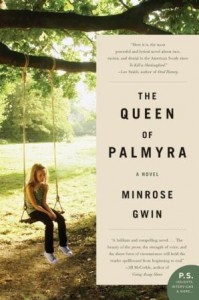
Book Tour: The Queen of Palmyra

| 3 comments:

Minrose Gwin (which, can I start out by saying how awesome of a name that is??) takes the reader to a dark place with The Queen of Palmyra, a chronicle of the summer of 1963 in small-town Mississippi from the perspective of 11-year-old Florence Forrest. The white residents of Millwood, Mississippi, have little to do with the black side of town, or "Shake Rag" as it's come to be called. In a town split by black and white, Florence can't figure out what belongs where.

Florence lives in a house built on secrets. Her daddy, Win, is a burial insurance salesman—the first job he's been able to hold in over a year—with secrets that Florence is too young to understand. Her mother sure understands them, though...and disapproves—this much is clear to Florence. Martha has established herself as the town cake-lady, baking cakes for the respectable white women while visiting the Negro bootlegger on the sly. With tension running rampant in the Forrest household, Florence spends a lot of her time at her grandparents house and with their black housekeeper, Zenie, and her husband Ray. When Zenie's college-aged niece Eva comes to live in Shake Rag and sell burial insurance to its residents, one resulting incident brings race relations in Millwood to a boiling point and begins to open Florence's eyes to the truth of the situation around her.

Gwin opens this book with this line: "I need you to understand how ordinary it all was," and to a naive Florence, everything was as she was used to. Florence is a product of her environment, and the author does a beautiful job of extracting a story from a very specific time and place. Each character plays a defined role in the life Gwin has crafted for Florence; and Florence is the one who gets to take a step back, almost as if she's pressing a 'pause' button and viewing her environment as it is rather than as she's told it should be. This story is more than anything an awakening of Florence as she starts to understand who her parents really are and how racism really affects both sides.

One thing you need to understand: Florence is telling this from her 11-year-old perspective...forty years later. She's reflecting on what she saw that fateful summer and how her limited knowledge can twist experiences and memories into an untruth. At one point, adult Florence states, "...to be an architect [of words and sentences], you have to understand context." Gwin uses brilliant metaphors about language and storytelling to illustrate how memories may be a lie because they aren't fully understood, and Florence is an incredibly strong voice that never seems to be dragged down by the abuse and ignorance in her life.

I've read several comments by people that compare this to The Help. If we're talking about books centered around race relations in the 1960s South, then yes, they are similar. But the tone of each is completely different. Gwin has written an honest and unflinching portrait of a time that is heart-wrenchingly horrifying but, at the same time, grips the reader with a thin thread of hope as you follow Florence's path to truth and enlightenment. I found it more Bastard Out of Carolina than The Help, but if you like Southern fiction—or just gritty, compelling fiction in general!—I highly recommend it.


Tune in to Blog Talk Radio with Book Club Girl on Monday, May 17th at 4PM EST as she discusses this book with author Minrose Gwin!

This is the first stop for The Queen of Palmyra on its TLC Book Tour! For the list of other stops throughout the month of May, visit here.

Review copy provided by TLC Book Tours.